
Published November 18, 2026
Macomb County Waterfront Homes For Sale

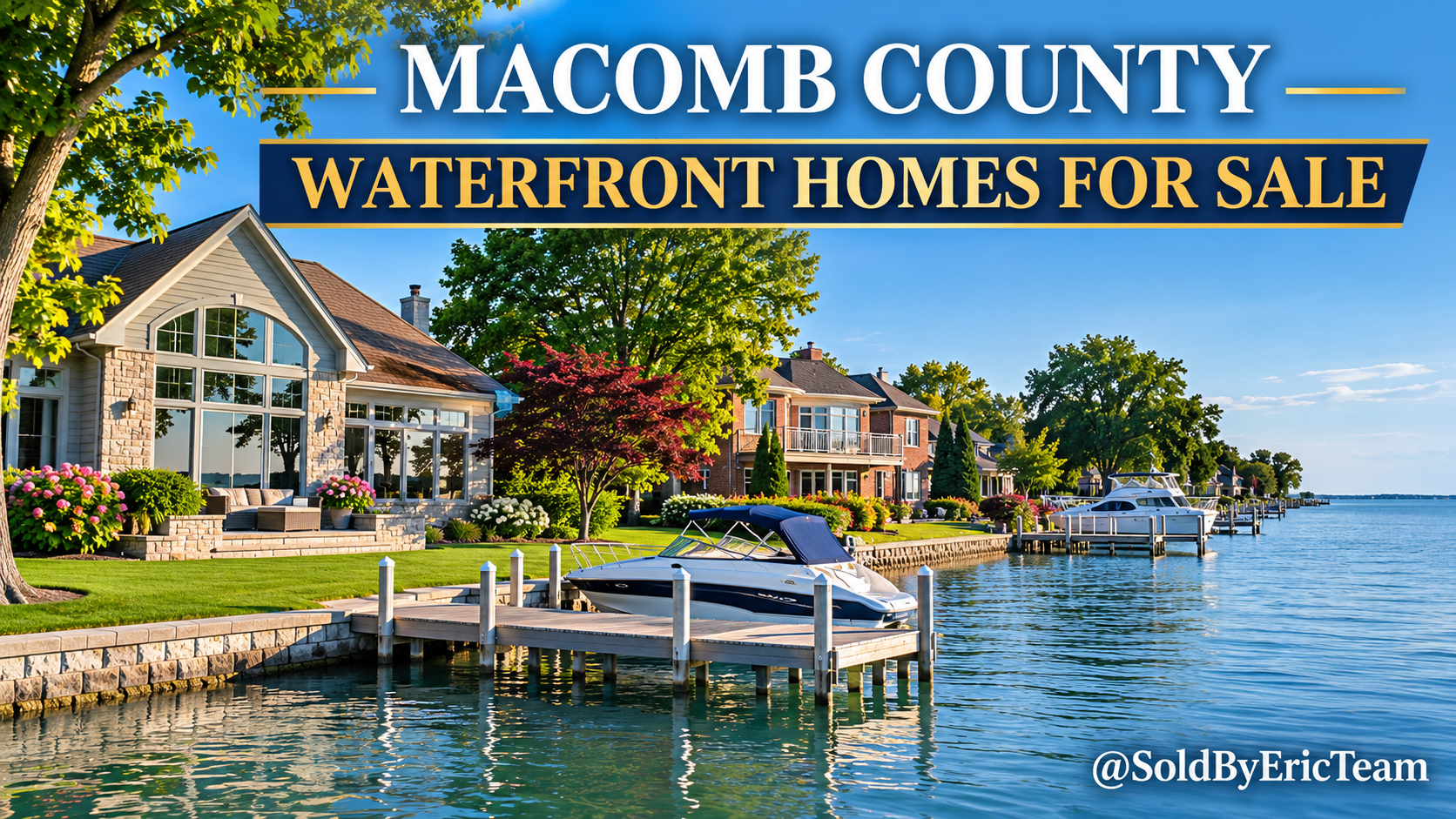
Macomb County Waterfront Homes for Sale: A Buyer’s Guide to Lake St. Clair Living
Searching for Macomb County waterfront homes for sale can mean very different things to different buyers. One person may picture a canal-front home with a private dock, while another wants a direct Lake St. Clair view, a river setting, or a home near public boat access. Before comparing listings, define what “waterfront” needs to mean for your daily life. In this guide to Macomb County waterfront homes for sale, you’ll learn how to compare local water settings, assess property details, and prepare useful questions before touring.
Macomb County’s eastern shoreline and connected waterways create several kinds of property and recreation opportunities. The county identifies 32 miles of Lake St. Clair coastline and lists public launch locations including Lake St. Clair Metropark in Harrison Township and Brandenburg Park in Chesterfield Township. That shoreline context helps explain why waterfront searches here span multiple communities and property styles. It does not mean every home advertised as waterfront offers the same access, view, dock rights, or boating conditions.
This guide explains how to compare waterfront locations, what to verify in a listing, and which property questions to raise before making an offer. The aim is to help you turn a broad search into a clear shortlist, then get qualified local guidance on the properties that fit your plans.
What Counts as Waterfront in Macomb County?
A listing may use “waterfront” for a home directly on Lake St. Clair, a canal, a river, an inland lake, or another body of water. Some homes have a water view without direct frontage. Others may have shared access through an association, community beach, launch, or recorded easement. These are not interchangeable features.
Read the full property details and confirm the exact relationship between the parcel and the water. Ask whether the property has direct frontage, shared frontage, deeded access, canal access, or only a nearby view. If the listing mentions a dock, boat lift, seawall, or shared shoreline, ask what is included in the sale and what documentation supports the rights described.
A broad listing filter can help you find candidates, but it cannot answer every property-specific question. Two homes in the same community may differ in water depth, shoreline condition, route to open water, and permitted uses. Treat each property as its own due-diligence project.
Explore Waterfront Communities Across Macomb County
Macomb County waterfront homes are spread across several communities. The right place depends on your preferred setting, commute, budget, home style, and how you expect to use the water.
Harrison Township
Harrison Township offers access to Lake St. Clair and a network of marinas, canals, and waterways. Buyers may find canal-front homes, river settings, and properties near public recreation. Compare the route from a particular canal or river to open water, and ask about dock configuration, water depth, and seasonal use. A waterfront label alone will not tell you whether a home suits your boat or boating routine.
Chesterfield Township and New Baltimore
Chesterfield Township and nearby New Baltimore include properties associated with Anchor Bay, Lake St. Clair, and residential canals. Some buyers value boating access; others are drawn to shoreline scenery or proximity to parks. Confirm the municipality, water frontage, and access details for each address. Nearby locations can appear together in broad search results even when their services, rules, and community character differ.
St. Clair Shores
St. Clair Shores has a strong connection to Lake St. Clair and local waterways. Buyers should compare the property’s specific shoreline or canal location, not just the city name. Check whether a home offers private frontage, shared access, a view, or proximity to a public launch. Ask about parking, dock arrangements, and any applicable community or association rules.
Other Macomb County Locations
Waterfront opportunities can also appear in other parts of the county, including properties near inland lakes, rivers, and ponds. A countywide search may return homes with very different settings. When you find a promising listing, check the water body, municipality, and property records rather than assuming that a map pin or marketing phrase answers those questions.
Choose the Water Setting That Fits Your Lifestyle
The best waterfront home is not simply the one with the largest view. Think about how you plan to use the property throughout the year.
If boating is a priority, identify the kind of boat you own or expect to use, then confirm the relevant water depth, dock or lift details, and route to open water. Ask whether the waterway is navigable for your intended use and whether any seasonal conditions affect access. Verify the information with the appropriate local sources and qualified professionals.
If you want peaceful views or outdoor relaxation, consider the orientation of the home, privacy, shoreline access, and how the setting changes across seasons. A home with a shared access area may suit you well even if it is not directly on the water, but the actual access rights and restrictions should be documented and understood.
If you want a year-round residence, evaluate the house as carefully as the waterfront. Look at the roof, foundation, windows, heating and cooling equipment, drainage, basement, and signs of water intrusion. Ask about maintenance history for shoreline structures and outdoor equipment. A beautiful setting should complement a sound home and a realistic ownership budget.
Questions to Ask Before You Tour
A focused set of questions can make showings more useful. Before touring, consider asking:
- Is the home directly on the water, on a canal, or near shared water access?
- What water body is shown in the listing, and where is the property’s actual frontage?
- Is a dock, boat lift, seawall, or other shoreline structure included?
- Are there recorded easements, association documents, or restrictions that define access and use?
- What are the approximate water depth and boating conditions at the property, and how can those details be verified?
- Are there known shoreline repairs, erosion concerns, drainage issues, or water-related maintenance needs?
- Is the property in a mapped flood hazard area, and what insurance questions should be discussed with a licensed insurance professional and lender?
- Which inspections or specialist evaluations make sense for this specific home and shoreline?
- What are the current property taxes, association dues, utility costs, and ongoing maintenance expenses?
The answers may require reviewing listing documents, municipal information, title records, insurance guidance, or specialist inspections. Your agent can help organize the questions and coordinate next steps, but technical, legal, flood, and insurance determinations should be confirmed with the appropriate professionals and authorities.
Look Beyond the Listing Photos
Photos can show the house and the view, but they may not show the details that shape ownership.
During a tour, look at the path between the home and water, the slope of the yard, visible shoreline conditions, drainage patterns, and the condition of any dock or seawall. Note whether neighboring structures affect privacy or water access.
Ask what recent work has been completed and whether permits or approvals are available for shoreline improvements.
In Michigan, some construction activities on Great Lakes bottomlands, including docks, boat lifts, and seawalls below the statutory ordinary high-water mark, require permits.
Requirements depend on the exact location and project, so confirm current requirements with Michigan’s Department of Environment, Great Lakes, and Energy and other applicable authorities before planning work.
Do not assume that an existing structure automatically has every approval needed for future changes. If you expect to repair, replace, or expand a dock or seawall, get qualified guidance about permits and ownership rights before relying on that feature in your decision.
Understand Flood Maps and Insurance Early
Waterfront buyers should check flood information for the specific address early in the process. Michigan’s Department of Environment, Great Lakes, and Energy explains that floodplain maps are guides and that map accuracy can vary.
The state advises buyers considering property near a watercourse to consult local, county, and state officials about flood exposure and building restrictions.
Ask your lender and a licensed insurance professional what coverage may apply to the property.
Michigan EGLE notes that standard homeowners insurance does not include flood damage, and federal flood insurance requirements can apply when a building securing a loan is in a federally identified special flood hazard area.
Coverage availability and cost depend on the community and property details. Do not rely on a listing description or a map alone as a final insurance determination.
A flood-zone review is one part of due diligence, not a prediction of what will happen to a particular home. The goal is to understand the property’s mapped status, insurance questions, and any relevant history before you commit.
Compare Total Ownership Costs
The purchase price is only one part of owning a waterfront home. Build a realistic budget that includes property taxes, homeowners insurance, any flood coverage, association dues, utilities, routine home maintenance, and care for the shoreline or water-related structures.
Some waterfront features may require specialized maintenance or repairs. Ask about the age and condition of docks, lifts, seawalls, and other improvements. A qualified inspector or marine contractor may be appropriate depending on the property.
Ask for available maintenance records, invoices, permits, and warranties, and have qualified professionals evaluate issues that are outside a general home inspection.
Also consider how you will use the property in winter and during periods when boating is limited. Year-round upkeep, snow removal, seasonal equipment, and travel to work or services may affect whether a location fits your routine.
Compare the full cost and practical use of several properties rather than choosing on the view alone.
Compare Direct Frontage, Canal Access, and Shared Access
Before you decide which listing deserves a visit, compare the type of access in plain terms. Direct frontage may offer a different shoreline experience from a canal, while shared access may depend on association documents or recorded easements.
Ask what the seller owns, what transfers with the property, and whether the access fits your intended use.
Then compare the home itself: layout, condition, parking, storage, yard, and distance to the places you visit regularly.
This simple side-by-side review helps you avoid treating every waterfront label as the same feature. It also gives your agent a clearer brief when new listings appear.
How to Compare Listings Efficiently
Start with a short list of non-negotiables. You might prioritize a particular community, direct water frontage, a specific boat setup, a certain number of bedrooms, a maximum price, or a manageable amount of maintenance. Separate must-haves from features you would enjoy but do not need.
Next, group listings by water setting. Compare direct lakefront with canal frontage, river frontage, inland-water properties, and shared-access homes separately. This keeps unlike properties from appearing equivalent just because they share the word “waterfront.”
Then review each candidate’s location, property details, disclosures, taxes, association documents, and available records. A local buyer’s agent can help you identify questions, arrange showings, and prepare an offer strategy. For legal rights, engineering, insurance, flood determinations, and permit requirements, confirm details with the appropriate specialists and public agencies.
Work With a Local Guide
A countywide search can surface a wide range of properties, but local context helps you compare them. An experienced agent can help distinguish between communities, organize showings, identify missing information, and guide you through the offer process. Ask the agent how they will help verify the features that matter to you and which questions should go to an inspector, title professional, insurer, lender, or government office.
Eric Jurmo and the Sold By Eric Team serve buyers across Macomb County and surrounding areas.
Share your target communities, budget, timing, and must-have waterfront features so the search can focus on properties that match your plans. Whether you are comparing a canal-front home, a Lake St. Clair setting, or a property with shared access, the next step is to evaluate the specific details behind each listing.
Start Your Search for Macomb County Waterfront Homes for Sale
A successful waterfront search begins with a clear picture of how you want to live and careful review of each property’s access, shoreline, condition, costs, and rules. Once you know what matters most, it becomes easier to compare listings and decide which homes deserve a closer look.
Ready to explore available properties?
Search current Macomb County waterfront homes for sale with Eric Jurmo and the Sold By Eric Team.

Eric Jurmo
| Sold by Eric Team | Eric Jurmo | Keller Williams Platinum
or another way