
Published September 16, 2026
New Construction Homes in Clinton Township MI

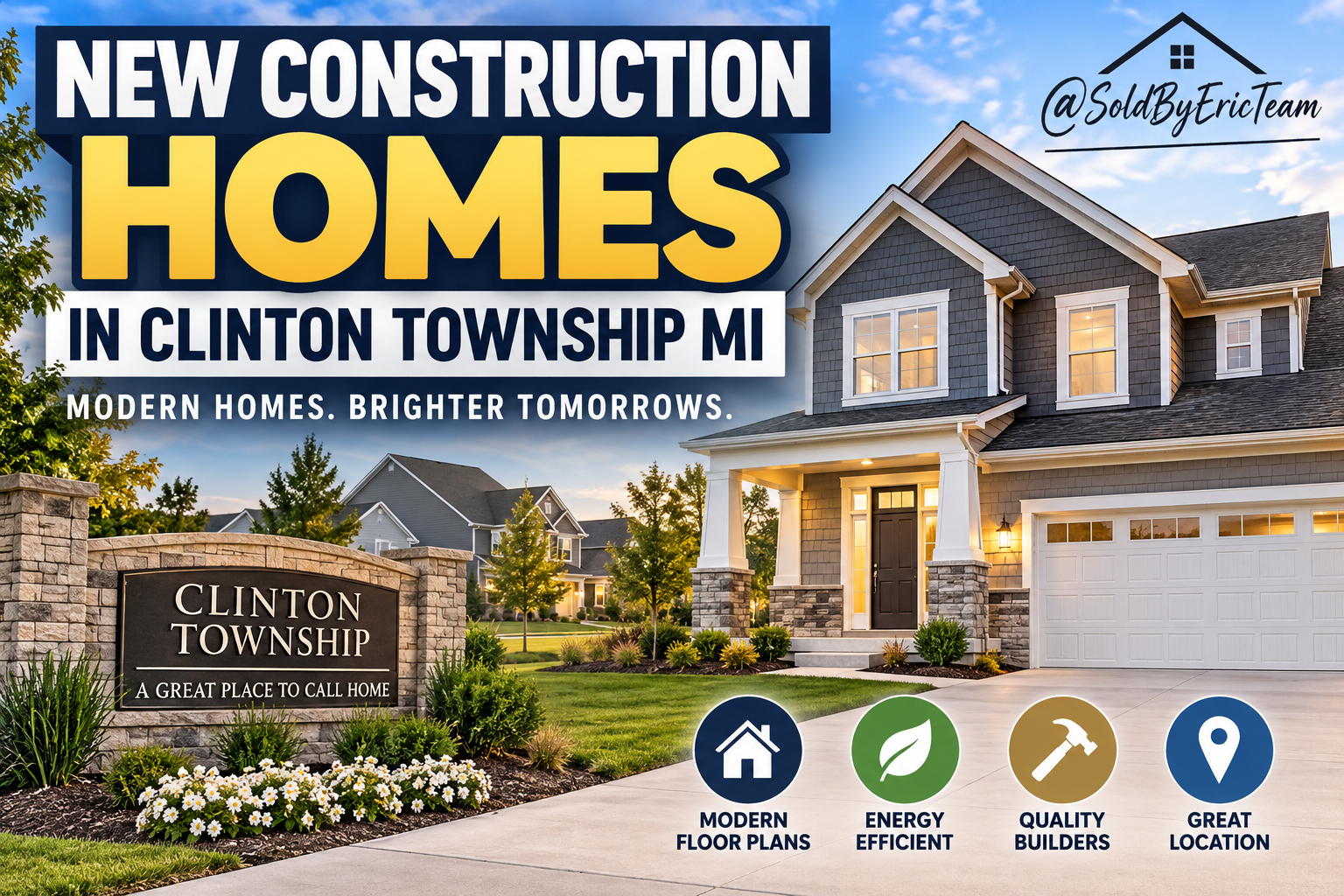
New Construction Homes in Clinton Township MI: A Complete Buyer’s Guide
New construction homes in Clinton Township MI give buyers an opportunity to enjoy modern floor plans, updated building materials, energy-conscious features, and a home that has not been lived in before. For buyers who want fewer immediate renovation projects and the ability to select certain finishes or features, new construction can be an appealing alternative to purchasing an older resale property.
Clinton Township is located in Macomb County and offers a mix of established neighborhoods, residential developments, shopping, services, parks, and access to major roads. Because the township is already extensively developed, new housing can take several forms. Buyers may encounter newly created subdivisions, smaller infill developments, condominium communities, attached homes, and individual homes constructed on available lots.
Buying a newly built home is different from buying an existing house. The process can involve builders, construction schedules, upgrade selections, warranties, inspections, financing requirements, and decisions that must sometimes be made months before move-in.
Understanding those differences can help buyers evaluate new construction homes in Clinton Township MI with realistic expectations and make better-informed decisions.
Why Consider New Construction Homes in Clinton Township MI?
New construction appeals to buyers for several practical reasons. The most obvious is that the major components of the house are new. Depending on the property and builder, that may include the roof, furnace, air conditioning, electrical system, plumbing, windows, appliances, insulation, flooring, and exterior materials.
That can reduce the likelihood of immediately facing some of the replacement projects commonly associated with older properties.
New homes also tend to reflect current preferences in residential design. Buyers may find open kitchens, larger islands, flexible living spaces, walk-in closets, primary suites, home-office areas, attached garages, mudrooms, and improved storage.
Another benefit is predictability. A newly constructed property may come with builder warranties covering specified components for defined periods. Warranty terms vary, so buyers should review the actual documents rather than assuming every item is protected.
Modern Floor Plans and Everyday Functionality
One reason buyers search for new construction homes in Clinton Township MI is the opportunity to get a floor plan designed around contemporary lifestyles.
Older homes can have smaller kitchens, separated living areas, limited closets, or layouts that require remodeling to meet a buyer's needs. New homes are often designed with connected kitchens and living spaces, larger gathering areas, more storage, and flexible rooms.
A flexible room might serve as an office today and a playroom, guest room, or hobby area later. This versatility can be especially valuable for households whose needs may change over time.
Potential for Greater Energy Efficiency
Modern construction standards and newer equipment can help improve a home's energy performance compared with some older houses, although actual efficiency varies by property.
Features may include improved insulation, insulated windows, efficient heating and cooling equipment, LED lighting, programmable or smart thermostats, and modern appliances.
Buyers should ask what energy-related features are included rather than relying solely on general claims about new construction. Specific equipment ratings, insulation specifications, window details, and appliance information provide a clearer picture.
What Types of New Construction Are Available in Clinton Township?
Buyers searching for new construction homes in Clinton Township MI may encounter several property types. Understanding the differences can make the search more efficient.
Single-Family Homes
Detached single-family homes typically provide the greatest separation from neighboring residences. Depending on the development, buyers may find ranch, colonial, or other contemporary layouts.
Lot sizes, garage configurations, basement options, exterior designs, and community rules can vary considerably.
Single-family new construction can appeal to buyers who prioritize private outdoor space, additional storage, or more control over the property.
New Construction Condominiums
Condominium developments can provide newer construction with a different ownership and maintenance structure. Depending on the community, an association may maintain certain exterior areas, landscaping, snow removal, common spaces, or other shared elements.
Buyers should carefully review association documents, fees, responsibilities, restrictions, insurance requirements, and rules before purchasing.
A condominium should not automatically be considered maintenance-free. The governing documents determine what the owner and association are each responsible for maintaining.
Attached Homes and Townhome-Style Properties
Attached housing can offer a middle ground between a traditional detached house and some condominium arrangements. These properties may provide modern layouts while using land more efficiently.
Ownership structures vary. Some attached properties are legally condominiums, while others may use different forms of ownership.
Understanding exactly what is being purchased is important before comparing prices.
Infill and Smaller Developments
Not every new home is part of a large subdivision. In an established community such as Clinton Township, builders may construct homes on individual vacant parcels or within smaller residential developments.
These properties can provide new construction while placing buyers closer to established neighborhoods, shopping, schools, or transportation routes.
How Much Do New Construction Homes in Clinton Township MI Cost?
The price of new construction homes in Clinton Township MI depends on the home type, location, lot, square footage, builder, construction stage, included features, upgrades, and current market conditions.
The advertised starting price is particularly important to understand. A base price may represent the home before buyers add optional features, lot premiums, upgraded finishes, structural changes, appliances, landscaping, or other selections.
Two homes based on the same floor plan can therefore have substantially different final prices.
Look Beyond the Base Price
When comparing homes, determine what is actually included in the quoted price.
Potential additional costs can include:
- Premium lots
- Finished or upgraded basements
- Additional bedrooms or bathrooms
- Fireplace options
- Flooring upgrades
- Cabinet and countertop selections
- Lighting packages
- Appliance upgrades
- Electrical additions
- Decks or patios
- Landscaping
- Window treatments
- Association fees
- Closing expenses
Buyers should request an itemized description of standard features and selected upgrades whenever possible.
That makes it easier to compare one new home with another and to compare new construction with an existing home that already includes improvements.
Move-In-Ready Homes vs. Building From the Ground Up
There are generally two ways to purchase new construction: buy a home that is completed or nearing completion, or enter the process earlier and have a home constructed.
Each option offers different advantages.
Move-In-Ready New Construction
A completed or nearly completed home provides more certainty. Buyers can physically see much of what they are purchasing, and the move-in timeline may be shorter.
The tradeoff is that many design decisions have already been made. Flooring, cabinets, countertops, fixtures, exterior finishes, and structural options may no longer be customizable.
For buyers who need to move relatively soon, this can still be the more practical option.
Building a New Home
Starting earlier in the construction process may provide more opportunities for customization. Depending on the builder and stage of construction, buyers may select finishes and potentially choose from available structural options.
Building requires patience and planning. Construction timelines can change because of weather, material availability, inspections, subcontractor schedules, permitting, or other factors.
Buyers should maintain flexibility around the projected completion date, particularly when coordinating the sale of another property or the end of a lease.
What Should Buyers Know About Builder Upgrades?
Upgrades can transform a base home, but they can also increase the final purchase price quickly.
The key is separating improvements that meaningfully affect everyday use from selections that are primarily aesthetic.
Structural upgrades deserve early consideration because they can be difficult or expensive to add after construction. Depending on the home, examples might include additional windows, expanded rooms, plumbing rough-ins, garage modifications, or certain basement features.
Cosmetic improvements are often easier to change later.
Before approving upgrades, buyers can ask themselves:
- Will this feature improve daily functionality?
- Would adding it after closing be difficult?
- Is the builder's price reasonable compared with completing it later?
- Does the upgrade fit the overall budget?
- Is it something I genuinely want or simply something attractive in the model home?
A disciplined upgrade budget can help prevent the final price from moving far beyond the buyer's original target.
Should You Use a Real Estate Agent for New Construction?
A buyer can benefit from having independent representation when evaluating new construction homes in Clinton Township MI.
The sales representative at a model home or builder's sales office generally represents the builder's interests. A buyer's real estate professional can help the purchaser evaluate the transaction from the buyer's perspective.
Depending on the circumstances, that can include reviewing comparable properties, discussing location considerations, helping evaluate upgrades, tracking deadlines, coordinating inspections, and assisting with the purchase process.
Buyers should determine representation arrangements before becoming deeply involved with a builder because builder policies regarding agents and registration procedures can vary.
Why Are Independent Inspections Important for a New Home?
A new home is still a complex structure assembled by many trades and contractors. New does not mean that an independent inspection has no value.
Buyers may choose to arrange inspections at appropriate construction stages when permitted by the contract and builder.
A professional home inspector can evaluate accessible components and identify conditions that may deserve further attention. The exact scope depends on when the inspection occurs and what portions of the property are accessible.
The Final Walkthrough Is Also Important
Before closing, buyers typically have an opportunity to review the completed home and identify items requiring attention.
This is sometimes described as a punch-list or orientation process.
Buyers should examine finishes, doors, windows, cabinets, flooring, fixtures, appliances, walls, exterior components, and other accessible areas. Questions about operating systems, maintenance requirements, warranties, and service procedures can also be addressed.
Documentation matters. Buyers should understand how unresolved items will be handled and how future warranty requests must be submitted.
Understanding New Home Warranties
Builder warranties can be valuable, but coverage is not unlimited.
Different portions of a house may have different warranty periods, exclusions, procedures, and requirements. Manufacturers may also provide separate warranties for appliances, equipment, windows, roofing materials, or other products.
Before closing, buyers should understand:
- What the builder warranty covers
- How long each type of coverage lasts
- What is specifically excluded
- How service requests are submitted
- Who handles manufacturer warranty claims
- Whether maintenance requirements affect coverage
- How emergency issues are reported
Keep warranty documents, receipts, manuals, inspection reports, and builder communications together after moving in.
What Location Factors Matter in Clinton Township?
The house itself is only part of a real estate decision. Location can influence convenience, daily routines, future marketability, transportation, and overall satisfaction.
When evaluating new construction homes in Clinton Township MI, buyers should consider the specific property rather than assuming every location within the township provides the same experience.
Commute and Transportation
Consider normal travel patterns, including work, school, shopping, medical appointments, recreation, and visits to family.
A home that looks convenient on a map may feel different during peak traffic periods. Buyers who commute regularly may benefit from testing typical routes at the times they would normally travel.
Shopping and Everyday Services
Clinton Township has established commercial corridors and access to a broad range of everyday services. Buyers should evaluate how a particular development fits their own routines.
Proximity to groceries, restaurants, healthcare, recreation, and other services can be especially important for buyers seeking long-term convenience.
Schools
School boundaries are an important consideration for households with school-age children and for buyers who simply want to understand the property thoroughly.
Buyers should independently verify the school district and individual school assignments for a specific address because boundaries and assignments can change.
Property Taxes and Assessments
Property taxes should be considered as part of the total monthly housing expense.
New construction can require additional attention because tax information associated with vacant land or an incomplete property may not represent the future tax obligation after the completed home is assessed.
Buyers should obtain appropriate information for the specific property and avoid estimating future expenses solely from a previous tax bill.
How Do You Compare New Construction With an Existing Home?
Neither option is automatically better. The right choice depends on the buyer's priorities, budget, schedule, and willingness to take on improvements.
New construction may offer modern layouts, newer systems, customization opportunities, and fewer immediate remodeling needs.
Existing homes may offer established landscaping, mature neighborhoods, immediate availability, existing improvements, and sometimes locations where new construction is limited.
A useful comparison considers total ownership rather than purchase price alone.
For example, an existing property may have a lower purchase price but require a roof, furnace, windows, kitchen renovation, or other improvements. A new property may have fewer immediate replacement needs but carry premiums for upgrades or unfinished outdoor features.
Compare the complete financial and practical picture.
A Step-by-Step Process for Buying New Construction Homes in Clinton Township MI
A structured process can make new construction easier to navigate.
1. Establish Your Budget
Determine a comfortable total housing budget before visiting model homes.
Include more than the purchase price. Consider estimated taxes, homeowners insurance, association costs where applicable, utilities, maintenance, closing expenses, upgrades, and post-closing purchases.
2. Obtain Financing Information
Speak with qualified lenders early enough to understand financing options and purchasing capacity.
Some builders may offer incentives connected with preferred lenders or other affiliated providers. Buyers should evaluate the entire financial package, including rates, fees, credits, terms, and closing costs, rather than focusing on a single incentive.
3. Define Your Must-Haves
Separate essential requirements from preferences.
Must-haves might include a first-floor primary suite, specific bedroom count, home office, basement, attached garage, or particular location requirement.
This prevents attractive model-home features from distracting from the household's actual needs.
4. Compare Communities and Builders
Look beyond the model home.
Evaluate lot characteristics, floor plans, standard specifications, upgrade pricing, association requirements, warranties, construction timelines, neighborhood surroundings, and contract terms.
5. Review the Contract Carefully
Builder purchase agreements can differ from contracts commonly used for resale properties.
Buyers should understand deadlines, deposits, financing provisions, construction changes, completion procedures, inspection rights, warranties, default provisions, and any other obligations before signing.
Professional legal or real estate guidance may be appropriate when buyers need help understanding contractual obligations.
6. Monitor the Construction Process
For a home being built, maintain organized records of selections, upgrades, payments, communications, and approved changes.
Do not assume verbal discussions automatically modify a written agreement.
7. Complete Inspections and Walkthroughs
Use permitted inspection opportunities and take the final walkthrough seriously.
Document outstanding concerns and understand how they will be addressed.
8. Prepare for Closing and Move-In
Confirm financing requirements, insurance, utilities, closing documentation, warranty information, and expected possession arrangements before the scheduled closing.
Keep some financial flexibility for purchases that may be necessary after moving into a newly constructed property.
Common Mistakes When Buying New Construction
New homes can appear straightforward because everything looks fresh and finished. The transaction still deserves careful evaluation.
Common mistakes include:
- Assuming the model home's features are standard
- Focusing only on the advertised starting price
- Spending too much on upgrades without a defined budget
- Skipping independent inspections
- Failing to review association rules
- Underestimating future property taxes
- Assuming construction completion dates cannot change
- Ignoring the lot's location within the development
- Not understanding warranty procedures
- Comparing homes based only on square footage
Another mistake is evaluating only the interior. Lot orientation, drainage, neighboring properties, road exposure, sidewalks, common areas, future construction, and surrounding land uses can matter significantly.
How to Choose the Right New Construction Home
The best-fitting home is usually the one that balances location, functionality, cost, and long-term needs rather than simply offering the longest list of upgrades.
Start with features that cannot easily be changed. Location, lot, community, overall floor plan, and major structural characteristics generally deserve greater weight than paint colors or decorative fixtures.
Think about how the home will function during an ordinary week. Consider parking, groceries, work-from-home needs, storage, laundry, entertaining, outdoor maintenance, and daily travel.
Buyers planning to stay for many years should also consider how their needs might evolve. Flexible spaces and practical layouts can help a house remain useful as circumstances change.
Questions Buyers Ask About New Construction Homes in Clinton Township MI
Are there new construction homes in Clinton Township MI?
Yes, buyers can encounter newly constructed housing in and around Clinton Township, although inventory and individual developments change over time. Options can include detached houses, condominiums, attached residences, infill construction, and homes in various stages of completion.
Is buying new construction different from buying a resale home?
Yes. New construction may involve builder contracts, construction timelines, deposits, design selections, upgrade decisions, warranties, and different inspection opportunities. Buyers should understand the builder's process before committing.
Can I negotiate the price of a new construction home?
Negotiability depends on the builder, property, inventory, market conditions, construction stage, and current sales strategy. In some situations, incentives, financing arrangements, upgrades, or closing-related terms may be part of the discussion rather than changes to the advertised price.
Do I need a home inspection if the house is brand new?
Many buyers choose independent inspections even for new homes. A newly constructed house contains numerous systems and components installed by different trades, so an inspection can provide an additional review of accessible areas.
Can I customize a new construction home?
Sometimes. The available choices depend on the builder and how far construction has progressed. Buyers entering earlier may have more opportunities to select finishes or options, while a move-in-ready home may already have most selections completed.
What does a builder's base price include?
It depends entirely on the builder and floor plan. Buyers should request a written list of standard features because model homes may contain upgrades that are not included in the base price.
How long does it take to build a new home?
Construction time varies according to the home, builder, permitting, weather, labor, materials, inspections, site conditions, and other factors. Buyers should treat estimated completion dates as estimates unless their contract specifically establishes otherwise.
Are new construction homes more energy efficient?
New homes may incorporate newer insulation, windows, heating and cooling equipment, appliances, and construction standards. Actual energy performance varies, so buyers should review the specifications of the particular home rather than assuming all new properties perform equally.
What should I look for during a new construction walkthrough?
Review accessible interior and exterior areas carefully, including doors, windows, walls, flooring, cabinets, countertops, fixtures, appliances, mechanical systems, and visible finishes. Document concerns and understand the builder's procedure for completing outstanding items.
Should I buy a move-in-ready home or build from the ground up?
A move-in-ready home can offer a shorter and more predictable path to occupancy, while building earlier in the process may provide more selection opportunities. The better fit depends on your timeline, budget, desired customization, and tolerance for construction uncertainty.
What expenses should I consider beyond the purchase price?
Potential expenses include upgrades, closing costs, property taxes, insurance, association fees, landscaping, window coverings, appliances or equipment not included by the builder, and other move-in purchases. Identifying these expenses early creates a more realistic budget.
What is the first step when searching for new construction in Clinton Township?
Begin by establishing your budget, financing expectations, preferred property type, location requirements, and essential home features. You can then compare available properties and communities based on the same criteria rather than making decisions primarily from model-home presentation.
Buying a newly built property can provide modern functionality and a fresh start, but careful comparison remains essential. Define your priorities, understand the complete cost, review builder terms, inspect the property, and evaluate the location as carefully as the house itself.
Explore your options, compare available properties, and take the next step toward new construction homes in Clinton Township MI today.

Eric Jurmo
| Sold by Eric Team | Eric Jurmo | Keller Williams Platinum
or another way